


For Enquiry
9948984444
9247456148

SRI VISWASANTHI EDUCATIONAL INSTITUTIONS
Near Vijayawada,Vuyyuru - 521 165,
Krishna Dt. (A.P.), India
FOR MORE DETAILS GIVE MISSED CALL TO
9247456148, 9948984444
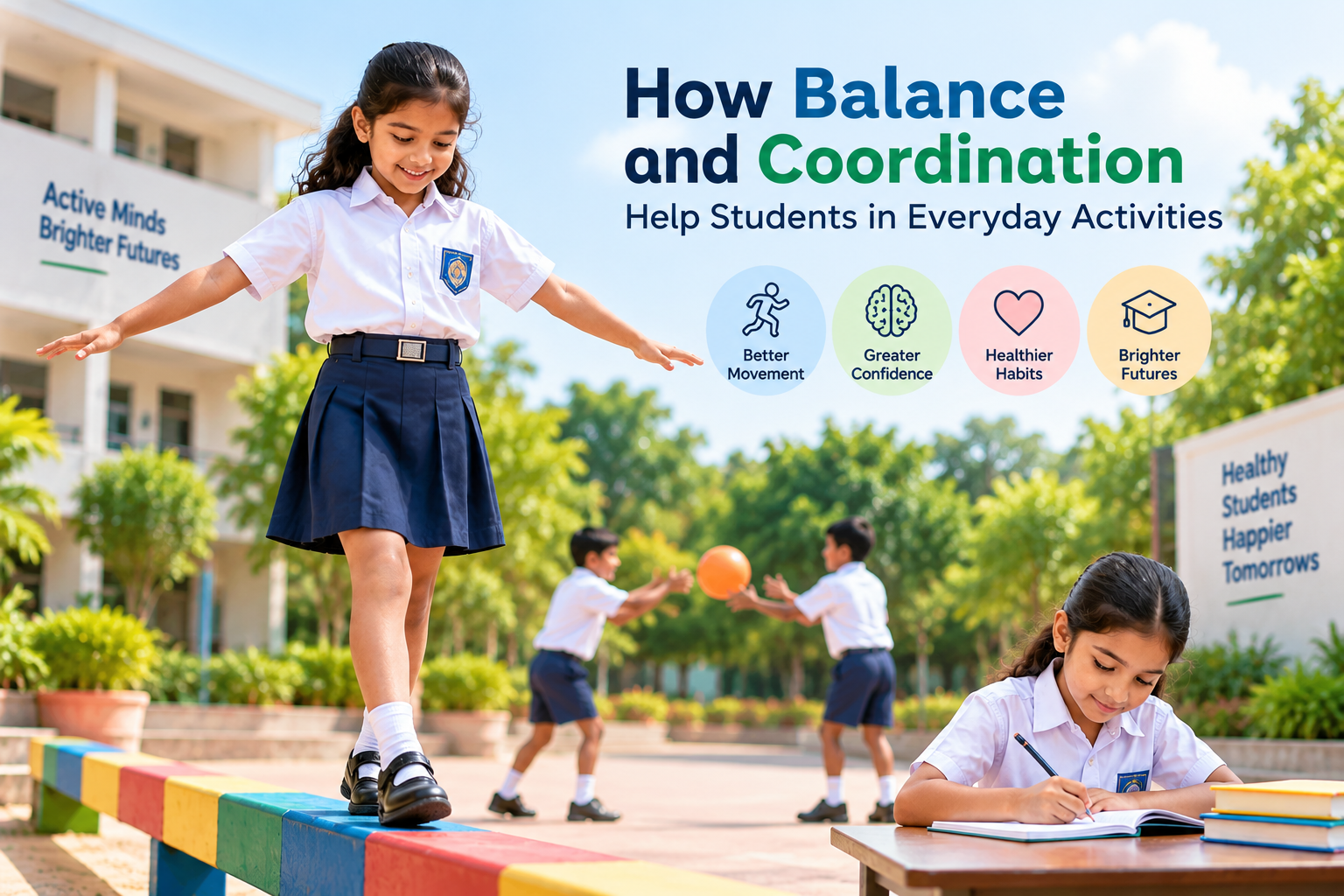
When we think about student fitness, we often think about running, jumping, playing sports or taking part in competitions. However, physical fitness is also built through smaller skills that students use every day. Balance and coordination are two important abilities that help children control their bodies and move confidently through everyday activities.
From walking across the school campus to climbing stairs, carrying a school bag, playing with friends or participating in physical education, students use balance and coordination more often than they may realise.
Balance is the ability to keep the body stable while standing still or moving. A student uses balance while walking along a narrow path, standing on one foot, climbing stairs or changing direction while playing.
Coordination is the ability to make different parts of the body work together smoothly. Catching a ball, writing in a notebook, kicking a football or using both hands for an activity all require coordination.
Although these skills may seem simple, they are important parts of a child's physical development.
Students move through many different environments during a school day. Good balance can help them feel more comfortable and confident while moving around.
For example, students use balance when:
Developing balance does not require complicated equipment. Simple movement activities can give children opportunities to practise controlling their bodies.
Coordination helps students perform movements accurately and smoothly. Many familiar school activities involve hand-eye coordination or coordination between different parts of the body.
Students use coordination when they:
As children practise these movements, they can gradually become more comfortable controlling their actions.
It is easy to associate balance and coordination only with sports. However, these skills are useful even for students who are not particularly interested in competitive games.
A child who does not play football or basketball still needs coordination for everyday tasks. Similarly, balance is useful whether a student is walking across the playground or participating in a physical activity.
This is why student fitness should not be measured only by sporting ability. Different children may develop different physical strengths, and giving them opportunities to practise a variety of movements can help them discover activities they enjoy.
Schools and families can introduce simple activities that encourage children to practise balance and coordination in enjoyable ways.
Some examples include:
Walking carefully along a straight line encourages students to control their movements and maintain balance.
Simple ball games can help children practise hand-eye coordination while also making physical activity enjoyable.
Short, age-appropriate balance activities can encourage children to become more aware of their body position.
Games that involve changing direction, stopping, starting or following a sequence of movements can develop coordination and body control.
Skipping, hopping and jumping activities encourage students to coordinate their arms and legs while maintaining control.
These activities can be adapted according to the child's age and ability. The emphasis should be on safe participation and enjoyment rather than competition.
Physical skills do not develop overnight. Students improve through regular opportunities to move, practise and try different activities.
When children become more comfortable with their physical abilities, they may also feel more confident participating in games, physical education and other activities. Encouragement is important, particularly for students who may initially find certain movements difficult.
Instead of focusing only on whether a child performs an activity perfectly, adults can encourage effort, practice and gradual improvement.
Children develop at different rates. Some may naturally enjoy running and jumping, while others may prefer activities that involve slower and more controlled movements.
Providing different opportunities allows students to discover their own strengths. Balance and coordination can be developed through play, movement activities, physical education and everyday experiences, making them useful skills for a wide range of students.
Balance and coordination may not always receive as much attention as strength or endurance, but they are an important part of physical development. They help students control their movements and participate more comfortably in everyday activities.
A healthy school environment can give children regular opportunities to move, play, practise and develop these skills. With encouragement and suitable activities, students can gradually become more confident in how they use and control their bodies.
At Sri Viswasanthi Schools, physical development can be viewed as an important part of a student's overall growth, alongside academic learning, creativity, social development and personal confidence.
Monday - Friday : 9am - 4pm
Saturday : 9am - 1pm

