


For Enquiry
9948984444
9247456148

SRI VISWASANTHI EDUCATIONAL INSTITUTIONS
Near Vijayawada,Vuyyuru - 521 165,
Krishna Dt. (A.P.), India
FOR MORE DETAILS GIVE MISSED CALL TO
9247456148, 9948984444
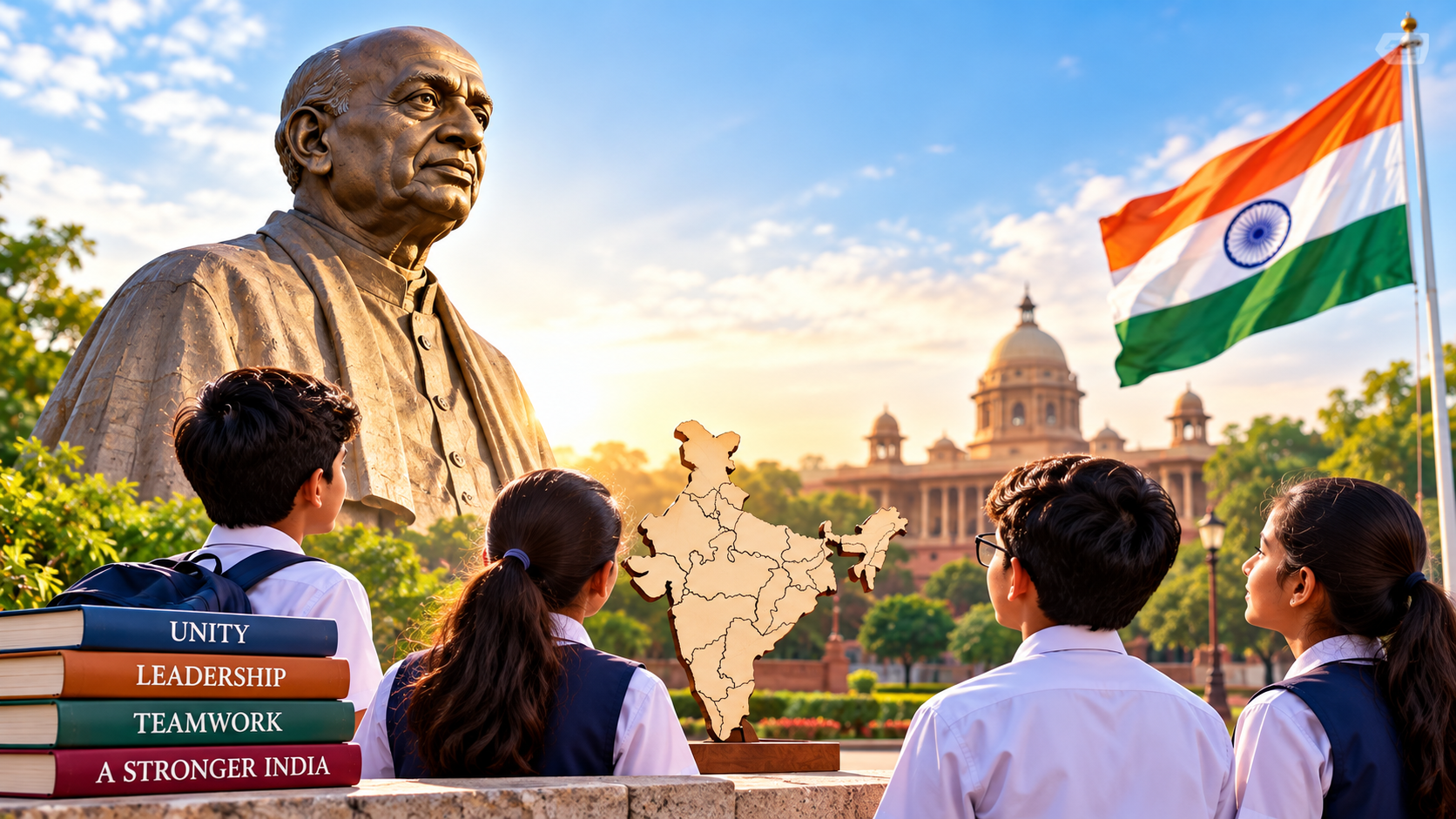
India is a country known for its diverse languages, cultures, traditions and communities. Despite these differences, the spirit of unity connects people across the nation. Understanding the importance of national unity helps students appreciate India's rich heritage and recognise the value of cooperation, respect and shared responsibility.
National Unity Day, also known as Rashtriya Ekta Diwas, is observed every year on 31 October to commemorate the birth anniversary of Sardar Vallabhbhai Patel, one of India's most influential freedom fighters and national leaders.
National Unity Day 2026 provides an opportunity for students to learn about Sardar Patel's contributions to India's integration and understand how unity, leadership and teamwork can make a positive difference in society.
National Unity Day is observed on 31 October to honour the birth anniversary of Sardar Vallabhbhai Patel, who was born in 1875.
The Government of India introduced the annual observance in 2014 to recognise his contributions to national integration and encourage citizens to strengthen the bonds of unity.
Sardar Patel played a significant role in India's freedom movement and served as the country's first Deputy Prime Minister and Home Minister after independence.
He is widely remembered as the Iron Man of India for his determination, administrative abilities and leadership.
For students, National Unity Day offers an opportunity to understand the importance of unity in a diverse country and the responsibilities that come with being part of a democratic society.
Sardar Vallabhbhai Patel was born on 31 October 1875 in Nadiad, Gujarat.
He studied law and became a successful barrister before joining India's freedom struggle.
Inspired by Mahatma Gandhi's principles, Patel became actively involved in movements against British colonial rule.
He played an important role in organising farmers and communities, particularly during the Kheda Satyagraha of 1918 and the Bardoli Satyagraha of 1928.
His leadership during the Bardoli movement earned him the title Sardar, meaning leader.
Following India's independence in 1947, Patel became one of the country's most important administrators.
His contributions to integrating princely states into the Indian Union remain among his most significant achievements.
When India gained independence in 1947, the subcontinent included hundreds of princely states that had been ruled by local monarchs under British paramountcy.
The political integration of these states was essential for building a unified and stable nation.
As Deputy Prime Minister and Home Minister, Sardar Patel worked closely with V. P. Menon and other officials to facilitate the accession of princely states to India.
Through negotiations, diplomacy and, in some cases, government action, most princely states became part of the Indian Union.
This process was complex and involved several leaders and institutions. Patel's determination and administrative leadership were especially important in shaping the newly independent country.
What students can learn: Building unity often requires patience, communication, careful planning and the ability to work towards a common objective.
One of the most important lessons from Sardar Patel's life is the value of unity.
People may have different backgrounds, beliefs and opinions, but cooperation can help them achieve common goals.
In school, students experience this principle during group projects, sports competitions, cultural programmes and classroom activities.
When classmates work together and support one another, they can often achieve better outcomes than when they work in isolation.
Student takeaway: Respect differences and contribute positively to shared goals.
Sardar Patel demonstrated leadership through his ability to organise people, make difficult decisions and remain committed to important responsibilities.
Effective leadership is not simply about giving instructions. It also involves understanding challenges, listening to others and accepting responsibility for decisions.
Students can develop leadership skills by participating in school activities, helping organise events and taking responsibility for group assignments.
A good student leader encourages participation, treats others fairly and supports the team.
Student takeaway: Leadership begins with responsibility, fairness and a willingness to help others.
Sardar Patel faced numerous political and administrative challenges throughout his public life.
His determination helped him continue working towards his objectives despite difficulties.
Students also encounter challenges while learning new subjects, preparing for examinations, participating in competitions or developing new skills.
These experiences require patience, consistent effort and the willingness to learn from mistakes.
Determination does not mean refusing to change an approach. It means remaining committed to improvement while finding better ways to solve problems.
Student takeaway: Consistent effort and a positive approach to challenges support personal growth.
India's diversity is reflected in its languages, festivals, customs, food and traditions.
National unity does not require everyone to be the same. Instead, it encourages people to recognise shared values while respecting individual and cultural differences.
Students can practise this by learning about different Indian states, respecting classmates' traditions and avoiding discrimination.
Understanding different perspectives also helps students develop empathy and communication skills.
Student takeaway: Unity becomes stronger when people respect and appreciate diversity.
Sardar Patel was known for his organisational abilities and disciplined approach to public responsibilities.
Discipline and teamwork are equally valuable in a student's daily routine.
Completing assignments on time, preparing for examinations, following school rules and contributing to group activities help students develop responsible habits.
Teamwork also teaches students how to share responsibilities, resolve disagreements and appreciate the contributions of others.
Student takeaway: Discipline helps individuals stay focused, while teamwork allows groups to achieve common objectives.
The phrase Unity in Diversity describes the idea that people from different cultural, linguistic and social backgrounds can live together with mutual respect and a shared sense of belonging.
India provides many examples of this principle.
Different states celebrate unique festivals, follow regional traditions and speak a variety of languages. Yet these communities are connected through the country's democratic institutions, Constitution and shared national identity.
Students can explore this concept through geography, history, civics and cultural education.
Learning about different regions of India helps them understand that diversity is an important part of the nation's identity.
National Unity Day encourages students to recognise that differences can enrich society rather than divide it.
National unity is not limited to historical events or national celebrations. Its underlying values can be practised through everyday behaviour.
Students can contribute by:
Respecting classmates: Treating everyone fairly, regardless of language, culture or background.
Working together: Participating actively in group projects and school activities.
Helping others: Supporting classmates who need assistance with learning or other school-related challenges.
Learning about India: Exploring the history, geography and traditions of different Indian states.
Resolving disagreements peacefully: Listening to different viewpoints and finding constructive solutions.
Being responsible citizens: Understanding the importance of rules, public property and community responsibilities.
These habits help students develop cooperation, empathy and a stronger sense of belonging.
Schools can make National Unity Day meaningful by organising activities that connect historical learning with practical experiences.
A quiz about Sardar Vallabhbhai Patel, India's freedom movement and the integration of princely states can help students strengthen their historical knowledge.
Students can create posters highlighting India's different cultures, languages and traditions while communicating the importance of national unity.
Teachers can encourage students to identify Indian states and union territories, explore their geographical locations and learn about their cultural significance.
Students can discuss the leadership qualities demonstrated by Sardar Patel and identify how those qualities apply to school life.
Topics such as The Importance of National Unity, Sardar Vallabhbhai Patel's Contribution to India and Unity in Diversity can encourage research and independent thinking.
Students can participate in a pledge-taking activity that encourages respect, cooperation and commitment to national unity.
These activities can help students understand the significance of National Unity Day while developing communication, creativity and teamwork skills.
Studying the lives of national leaders allows students to understand the events, decisions and challenges that shaped modern India.
Historical learning becomes more meaningful when students examine not only what leaders achieved but also the circumstances in which they worked.
Sardar Patel's life offers opportunities to explore India's freedom struggle, political integration, public administration and democratic development.
Students can also reflect on how qualities such as responsibility, perseverance and cooperation remain relevant today.
By connecting historical events with everyday experiences, students can develop a deeper understanding of citizenship and the importance of contributing positively to society.
National Unity Day 2026 reminds us of Sardar Vallabhbhai Patel's important contributions to India's integration and the continuing significance of unity in a diverse nation.
His life demonstrates the value of leadership, determination, discipline and cooperation in addressing complex challenges.
For students, these lessons extend beyond history textbooks. They can be applied through respectful communication, responsible behaviour, teamwork and an appreciation of India's cultural diversity.
At Sri Viswasanthi Schools, we believe that education should help students understand both the achievements of the past and the responsibilities of the present. Learning about national leaders such as Sardar Vallabhbhai Patel encourages young minds to appreciate India's heritage, respect differences and develop the values needed to contribute positively to their communities and the nation.
Monday - Friday : 9am - 4pm
Saturday : 9am - 1pm

