


For Enquiry
9948984444
9247456148

SRI VISWASANTHI EDUCATIONAL INSTITUTIONS
Near Vijayawada,Vuyyuru - 521 165,
Krishna Dt. (A.P.), India
FOR MORE DETAILS GIVE MISSED CALL TO
9247456148, 9948984444
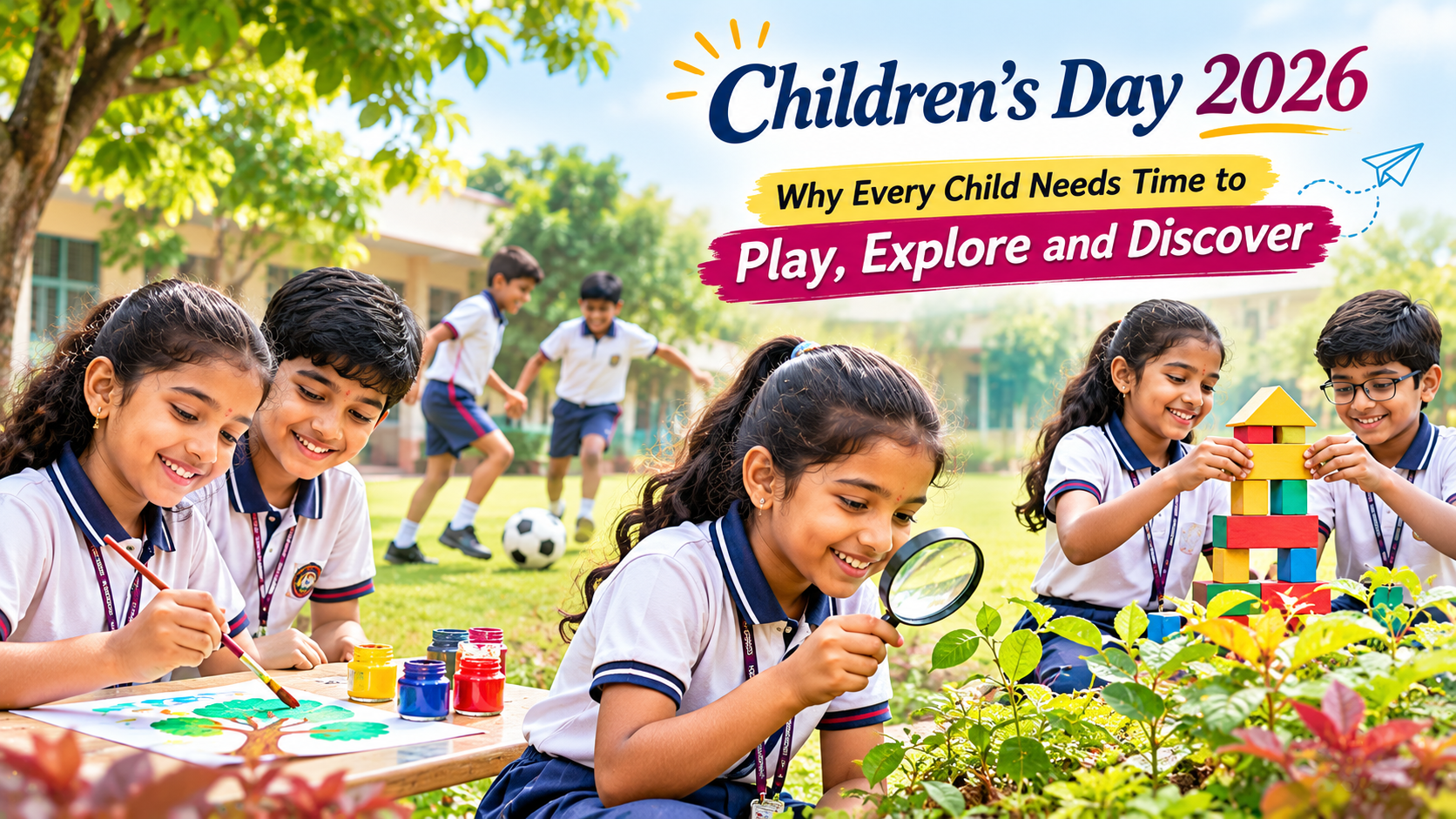
Childhood is a time of curiosity, imagination and discovery. Every new experience gives children an opportunity to understand the world, develop skills and build confidence. While classroom education plays an essential role in academic development, activities such as playing, exploring and discovering are equally important for a child's overall growth.
Children's Day 2026, celebrated in India on 14 November, provides a meaningful opportunity to recognise the importance of childhood and reflect on how parents and educators can support children's learning and development.
This Children's Day, it is worth understanding why children need opportunities to play, ask questions, explore their surroundings and learn through everyday experiences.
Children's Day is celebrated every year on 14 November to commemorate the birth anniversary of Pandit Jawaharlal Nehru, India's first Prime Minister.
Born on 14 November 1889, Jawaharlal Nehru is remembered for his interest in children's welfare and education. He was affectionately known as Chacha Nehru.
Children's Day highlights the importance of children's wellbeing, education, rights and opportunities for development.
Schools across India commonly observe the occasion through cultural programmes, creative activities, competitions and interactive learning experiences.
Beyond these celebrations, Children's Day reminds us that every child deserves an environment where they feel encouraged to learn, express themselves and develop their individual abilities.
Play is often considered a recreational activity, but it also contributes to children's learning and development.
Through play, children explore ideas, practise skills, interact with others and discover different ways of solving problems.
Activities such as building blocks, outdoor games, puzzles, storytelling and imaginative play can support several areas of development.
Play provides opportunities for children to learn naturally through observation, experimentation and experience.
Children often use their imagination to create stories, invent games and explore new possibilities.
For example, a simple collection of building blocks can become a house, bridge, tower or imaginary city.
These activities encourage children to think creatively and develop original ideas.
Drawing, painting, storytelling and role-playing also allow children to express their thoughts and explore different perspectives.
What children learn: Creativity, imagination, self-expression and flexible thinking.
Physical activity is an important part of a healthy childhood.
Outdoor games such as running, skipping, cycling and playing age-appropriate sports provide opportunities for movement and exercise.
Regular physical activity can help children develop coordination, balance, strength and physical confidence.
Outdoor play also encourages children to spend time away from screens and engage with their surroundings.
Group sports introduce students to rules, teamwork and the importance of practising skills consistently.
What children learn: Physical coordination, active habits, teamwork and perseverance.
Playing with classmates and friends creates opportunities for children to interact with others.
During group activities, children practise sharing, taking turns, listening and following common rules.
They may also experience disagreements and learn how to resolve them constructively.
For example, organising a team game requires children to communicate, cooperate and understand different responsibilities.
These experiences can help them build positive relationships and develop empathy.
What children learn: Communication, cooperation, patience and respect for others.
Children naturally ask questions about the world around them.
Why do plants need sunlight? How does rain form? Why do some objects float while others sink?
Such questions reflect curiosity and a desire to understand how things work.
Exploration-based activities encourage children to observe, compare, experiment and draw conclusions.
Simple activities such as growing seeds, observing insects, exploring magnets or examining different materials can introduce children to basic scientific concepts.
When students are encouraged to ask questions and investigate possible answers, they develop a stronger connection with learning.
What children learn: Observation, questioning, experimentation and logical thinking.
Children develop confidence when they are given opportunities to attempt new activities and learn from their experiences.
Solving a puzzle, learning to ride a bicycle or completing a creative project can provide a sense of achievement.
Not every attempt will be successful immediately.
Children may need to practise, make adjustments and try again before achieving their goals.
These experiences help them understand that learning is a gradual process.
Parents and teachers can support this development by appreciating effort, offering constructive guidance and encouraging children to approach challenges positively.
What children learn: Independence, perseverance, adaptability and confidence.
Textbooks provide structured knowledge, but practical experiences can help students understand how academic concepts apply in everyday life.
For example:
Measuring ingredients while cooking can introduce mathematical concepts.
Observing plants can support science lessons.
Visiting historical places can make history more engaging.
Creating rangoli patterns can help students explore symmetry.
Participating in group activities can develop communication and leadership skills.
These experiences allow children to connect classroom lessons with real-world situations.
Experiential learning also encourages students to apply their knowledge rather than relying only on memorisation.
When children understand how a concept relates to everyday life, they may find it easier to remember and use.
Children often follow structured routines involving school, homework, tuition and organised activities.
While routines provide consistency, children also benefit from having time for independent play and exploration.
Unstructured play allows children to decide what they want to do, create their own activities and explore personal interests.
For example, a child may choose to draw, build something, read a story or invent a game.
These opportunities can encourage decision-making and independent thinking.
Free time should be appropriate to a child's age and supported by a safe environment.
The key lesson: A balanced childhood includes both structured learning and opportunities for independent discovery.
Parents can create opportunities for learning through simple everyday activities without requiring expensive toys or elaborate arrangements.
When children ask questions, encourage them to think about possible answers.
Instead of immediately providing every solution, guide them towards observation and discovery.
Age-appropriate drawing supplies, building blocks, books, puzzles and craft materials can encourage imagination and problem-solving.
Encourage children to participate in safe outdoor games, nature walks and physical activities.
Activities such as gardening, cooking with adult supervision and organising household items can introduce practical concepts.
Recognise children's attempts, improvements and willingness to learn rather than focusing only on results.
Provide time for academic learning, physical activity, rest, family interaction and recreational play.
These practices can help children develop positive learning habits while enjoying their childhood.
Schools play an important role in creating environments where students can develop academically, socially, physically and emotionally.
A balanced educational approach includes opportunities for classroom learning, creative expression, physical activity and collaborative experiences.
Activities such as science projects, storytelling, sports, art, music and group discussions allow students to explore different interests and abilities.
Teachers can encourage curiosity by creating opportunities for questions, discussion and practical learning.
Collaborative activities also help students understand the importance of teamwork, communication and mutual respect.
When academic knowledge is supported by meaningful experiences, children can develop a broader range of skills that contribute to their overall growth.
Children's Day celebrations can combine enjoyment with educational experiences.
Here are some activities that schools and families can consider for Children's Day 2026.
Creative Art Activities: Encourage children to express their ideas through drawing, painting or craft projects.
Science Discovery Corner: Introduce safe, age-appropriate experiments that encourage observation and curiosity.
Storytelling Sessions: Allow children to create stories, share experiences and practise communication skills.
Outdoor Team Games: Organise activities that promote movement, cooperation and teamwork.
Puzzle and Problem-Solving Challenges: Provide opportunities for logical thinking through riddles, puzzles and interactive games.
Nature Exploration: Encourage students to observe plants, birds and natural surroundings while learning about the environment.
Talent Sharing Activities: Create opportunities for children to share interests such as music, art, poetry or other creative skills without unnecessary competition.
These activities can help children celebrate the occasion while developing confidence, creativity and positive social relationships.
Every child has different interests, abilities and ways of learning.
Some children enjoy mathematics and scientific experiments, while others may be interested in art, music, sports, reading or creative storytelling.
Providing varied learning opportunities allows children to discover their strengths and explore new interests.
It is also important to recognise that children develop skills at different rates.
Comparing children constantly or expecting identical achievements can overlook their individual learning journeys.
A supportive environment encourages children to explore, make mistakes, practise and develop confidence in their abilities.
When children feel respected and encouraged, they are better positioned to participate actively in learning and personal development.
Children's Day 2026 reminds us that childhood is not only about academic achievements but also about curiosity, imagination, friendship and personal growth.
Play, exploration and discovery provide valuable opportunities for children to develop creativity, confidence, communication skills and independent thinking.
By encouraging a healthy balance between structured education and practical experiences, parents and educators can help children enjoy learning while developing important life skills.
At Sri Viswasanthi Schools, we believe that education should nurture curiosity, encourage meaningful learning and support the overall development of every child. Children's Day offers an opportunity to recognise the importance of creating a positive learning environment where students can explore their interests, develop their abilities and grow with confidence.
Wishing all children a joyful and inspiring Children's Day 2026!
Monday - Friday : 9am - 4pm
Saturday : 9am - 1pm

