


For Enquiry
9948984444
9247456148

SRI VISWASANTHI EDUCATIONAL INSTITUTIONS
Near Vijayawada,Vuyyuru - 521 165,
Krishna Dt. (A.P.), India
FOR MORE DETAILS GIVE MISSED CALL TO
9247456148, 9948984444
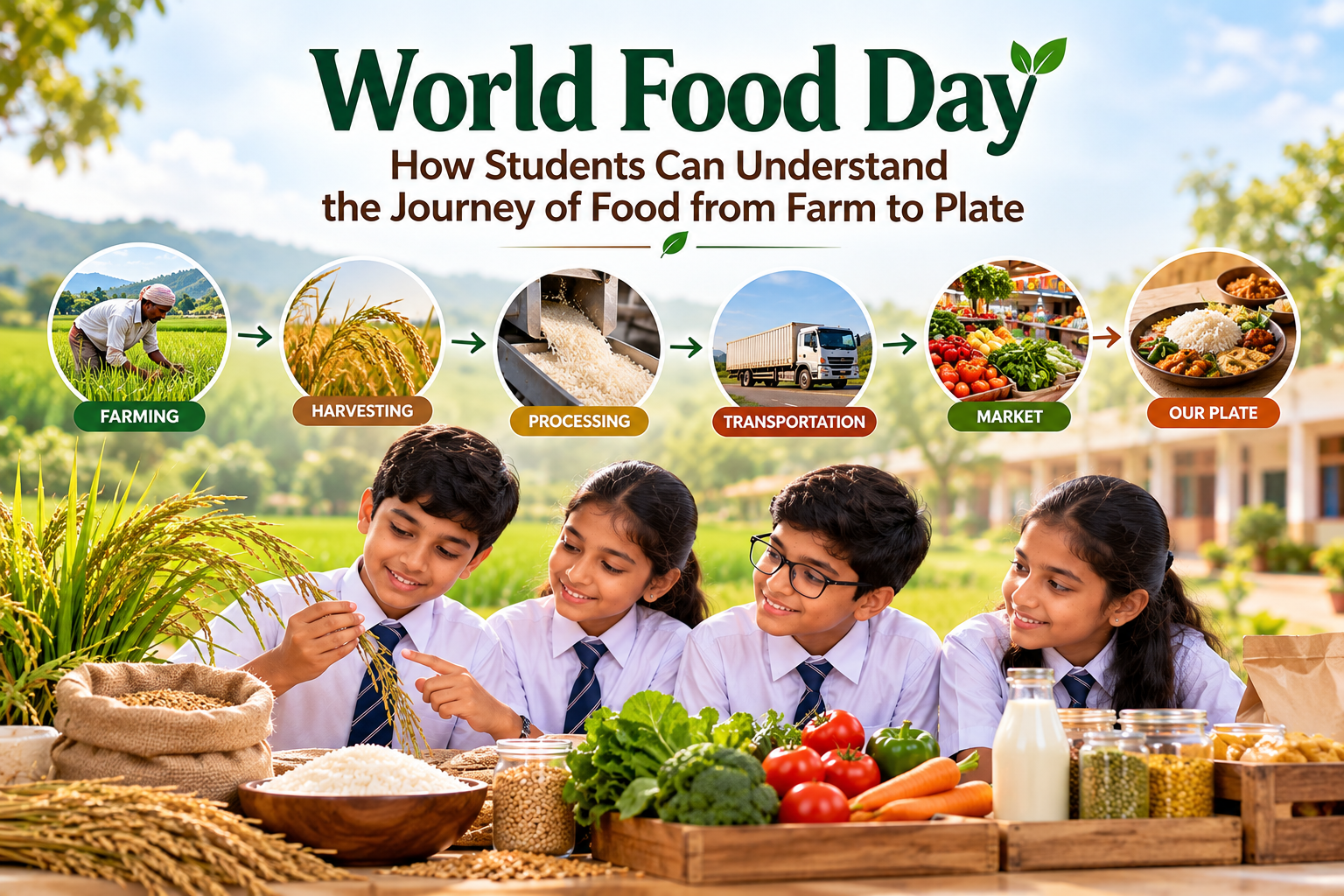
Every meal we enjoy has a story behind it. The rice on our plates, the vegetables in our curries and the fruits we eat travel through several stages before reaching our homes. From farmers cultivating crops to workers transporting and selling food, many people contribute to making our daily meals possible.
World Food Day, observed every year on 16 October, provides an opportunity for students to understand where food comes from, how it reaches consumers and why reducing food waste matters.
For school students, exploring the journey of food from farm to plate is an interesting way to connect science, geography, environmental studies and everyday life.
World Food Day is observed annually on 16 October to mark the founding of the Food and Agriculture Organization (FAO) of the United Nations in 1945.
The day encourages awareness about hunger, food security, sustainable agriculture and the importance of ensuring that people have access to sufficient, safe and nutritious food.
It also reminds us that producing food involves natural resources, human effort, scientific knowledge and careful planning.
Students can use this occasion to explore how food is produced and understand the importance of protecting the resources needed for agriculture.
The journey of food involves several important stages. Each stage plays a role in making food available for consumption.
Most of the food we eat begins on farms.
Farmers prepare the soil, select suitable seeds, plant crops and provide the water and nutrients needed for growth.
Different crops require different growing conditions.
For example, rice is widely cultivated in regions with suitable water availability, while crops such as millets can grow in comparatively drier conditions.
Farmers also consider seasonal rainfall, soil quality, temperature and crop protection when planning agricultural activities.
What students can learn: Farming connects biology, environmental science and geography. Understanding plant growth helps students recognise the relationship between food production and natural resources.
Once crops reach maturity, farmers harvest them using suitable tools or agricultural machinery.
Harvesting methods depend on the type of crop and the farming practices followed.
For instance, paddy crops are harvested when the grains mature, while fruits and vegetables are collected according to their growth and ripening stages.
Harvesting at the appropriate time helps maintain the quality of agricultural produce.
What students can learn: Agricultural work requires planning, observation and an understanding of plant development.
Many agricultural products require processing before they can be eaten or used in cooking.
Paddy is milled to produce rice, wheat is ground into flour and milk may be pasteurised to improve its safety.
Some foods undergo cleaning, sorting, drying or packaging before reaching markets.
Food processing can make certain products safer, easier to store or more convenient to prepare.
However, the methods used vary depending on the food and its intended use.
What students can learn: Food processing demonstrates how scientific principles and technology are applied in everyday life.
After harvesting and processing, food must be transported to different locations.
Trucks, trains and other transport systems help move agricultural products from farms and processing centres to markets, shops and distribution facilities.
Some food items, such as fresh milk, vegetables and certain fruits, require temperature-controlled storage or transportation to maintain quality.
The distance between farms and consumers can also influence the time and resources needed to deliver food.
What students can learn: Transportation connects agriculture with geography, infrastructure, technology and the economy.
Food does not always reach consumers immediately after harvesting.
Grains may be stored in warehouses, while perishable products often require refrigeration or other suitable storage conditions.
Proper storage helps protect food from moisture, pests, contamination and spoilage.
Wholesalers, retailers and other distributors then help make food available to consumers.
What students can learn: Safe storage and efficient distribution are important for maintaining food quality and reducing avoidable losses.
The final stage of the journey happens when food reaches homes, restaurants or school dining facilities.
Families purchase ingredients, wash and prepare them, and cook meals using different methods.
Food preparation involves several scientific changes, including heating, mixing and changes in texture.
For example, rice absorbs water during cooking, while vegetables may soften when heated.
By observing these everyday processes, students can discover how science is connected to the meals they eat.
Modern agriculture combines traditional knowledge with scientific developments.
Farmers may use soil testing to understand nutrient requirements, weather forecasts to plan agricultural activities and irrigation methods to manage water use.
Agricultural researchers also study crop varieties, plant diseases and methods of improving productivity.
Students can explore how different school subjects contribute to agricultural development:
Biology: Understanding plant growth, photosynthesis and crop diseases.
Chemistry: Learning about soil nutrients, fertilisers and food preservation.
Physics: Exploring irrigation equipment, agricultural machinery and energy use.
Geography: Studying climate, rainfall, soil types and crop-growing regions.
Mathematics: Calculating crop quantities, land measurements and resource requirements.
These connections demonstrate that agriculture is an important field where scientific knowledge is applied to practical challenges.
Food security means that people have reliable access to sufficient, safe and nutritious food for a healthy and active life.
Producing enough food is only one part of achieving food security.
Food must also be affordable, accessible and properly utilised.
Challenges such as extreme weather, crop damage, inadequate storage facilities and disruptions to transportation can affect food availability.
World Food Day encourages students to understand these challenges and appreciate the importance of responsible food production and distribution.
Food can be lost or wasted at different stages of its journey.
Food loss generally occurs during production, harvesting, storage, processing or transportation before food reaches retail consumers.
Food waste commonly occurs at retail, food-service and household levels when edible food is discarded.
For example, vegetables damaged during transportation may contribute to food loss, while uneaten food thrown away after a meal contributes to food waste.
Both can involve unnecessary use of water, land, energy and human effort.
Students can begin understanding this issue by observing how food is handled at home and in school.
Students can develop responsible food habits through practical actions.
Choosing an appropriate portion during meals can help reduce leftover food.
Learning how different foods should be stored can help maintain freshness and prevent avoidable spoilage.
When stored and handled safely, suitable leftover food may be used in another meal rather than discarded.
Learning about seasonal fruits and vegetables helps students understand agricultural cycles and local food availability.
Students can explore how suitable fruit and vegetable scraps can be converted into compost, which adds organic matter to soil.
These simple activities can make environmental awareness a part of everyday routines.
Schools can make World Food Day more meaningful through activities that encourage observation, discussion and practical learning.
Farm-to-Plate Flowchart: Students can select a familiar food item, such as rice or wheat, and create a flowchart showing how it moves from cultivation to consumption.
Food Origin Mapping: Students can identify where common fruits, vegetables and grains are grown in India and locate these regions on a map.
Seed Germination Experiment: Growing seeds under different conditions can help students observe the importance of water, air and suitable temperatures.
Food Waste Awareness Activity: Students can discuss practical ways to reduce avoidable food waste at home and school.
Agriculture and Science Quiz: Questions about crops, irrigation, food storage and farming technology can encourage students to explore new information.
Such activities help students understand that food is connected to several subjects beyond the classroom textbook.
Food reaches our plates through the combined efforts of many people.
Farmers cultivate crops, agricultural workers assist with harvesting, scientists improve farming methods, transport workers move produce and vendors make food available to consumers.
Recognising these contributions helps students understand the importance of cooperation across different occupations.
It also encourages them to appreciate the effort and resources involved in producing even a simple meal.
World Food Day encourages students to look beyond the food on their plates and understand the journey that makes every meal possible.
From planting seeds and harvesting crops to processing, transportation, storage and cooking, each stage involves scientific knowledge, natural resources and human effort.
Understanding this journey helps students appreciate the contributions of farmers, recognise the importance of food security and develop responsible habits that reduce food waste.
At Sri Viswasanthi Schools, we believe that connecting classroom learning with real-world experiences helps students develop scientific curiosity, environmental awareness and respect for the people and resources involved in food production. World Food Day offers a meaningful opportunity to encourage these values and inspire students to make thoughtful choices in their everyday lives.
Monday - Friday : 9am - 4pm
Saturday : 9am - 1pm

