


For Enquiry
9948984444
9247456148

SRI VISWASANTHI EDUCATIONAL INSTITUTIONS
Near Vijayawada,Vuyyuru - 521 165,
Krishna Dt. (A.P.), India
FOR MORE DETAILS GIVE MISSED CALL TO
9247456148, 9948984444
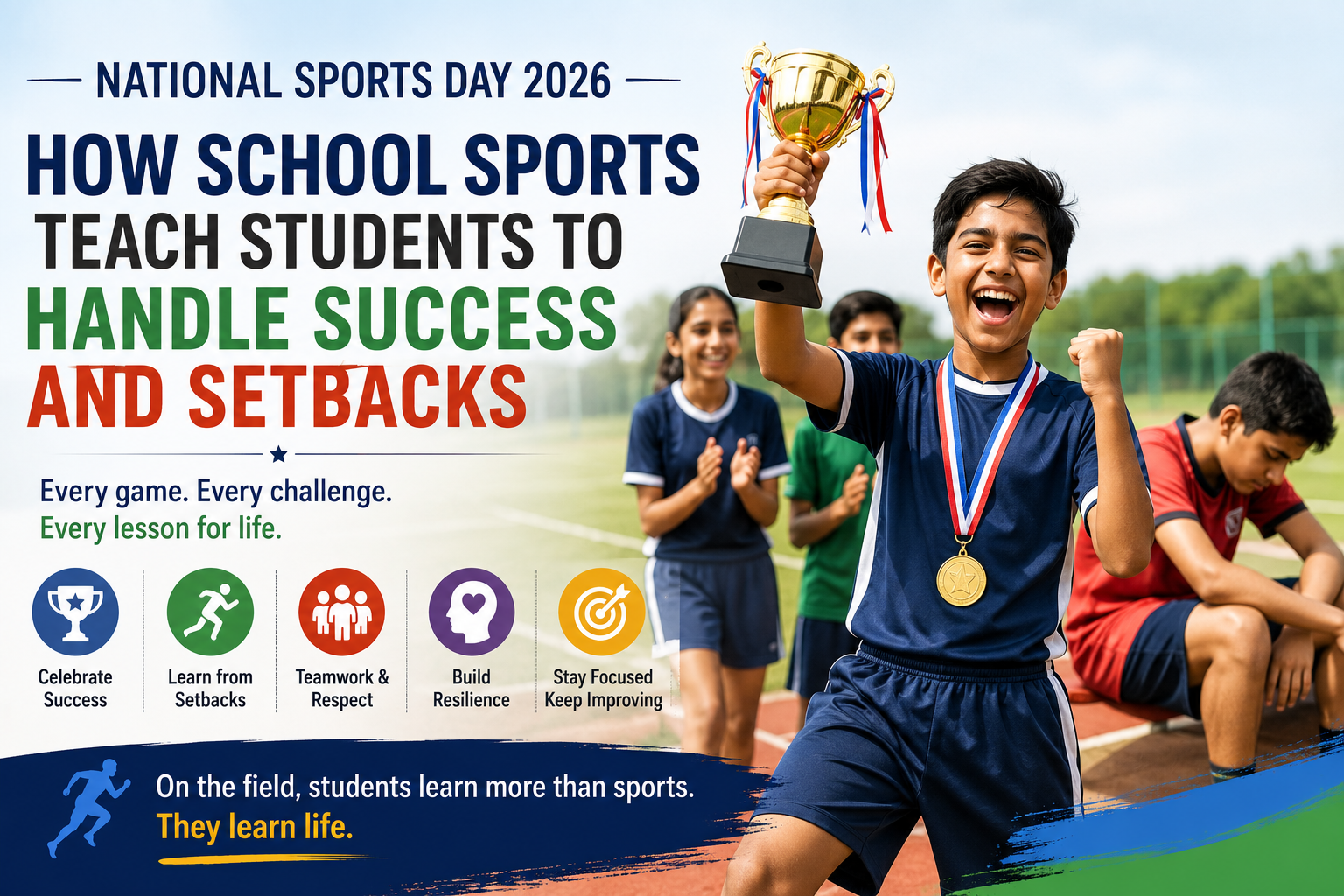
National Sports Day, observed in India on 29 August, is an opportunity to recognise the importance of sports and physical activity in student life. While school sports are often associated with fitness, competitions and teamwork, they also teach children valuable lessons about handling both success and setbacks.
Every match, race or competition gives students an opportunity to experience different outcomes. Learning how to respond to those outcomes can help children develop resilience, confidence, discipline and a balanced approach to challenges.
A sporting event does not always end with a victory. Students may win one competition and lose another. They may achieve a personal best or experience an unexpected setback.
These experiences can teach an important lesson: success is not only about winning, and setbacks are not the end of the journey.
School sports provide a practical environment where students can experience this lesson rather than simply hearing about it in a classroom.
Winning can be exciting and rewarding, especially after considerable preparation and effort. However, students also need to learn how to handle success responsibly.
Sports can teach students to:
Learning to remain grounded after success is an important quality that can benefit students in academics, careers and personal life.
Losing a match or failing to achieve a target can be disappointing. For young students, learning how to respond to disappointment is an important part of growing up.
Sports provide regular opportunities to experience setbacks in a controlled and supportive environment.
Students can learn to ask:
This encourages students to focus on improvement instead of becoming discouraged by a single result.
Resilience is the ability to recover from difficulties and continue moving forward.
School competitions can help students gradually develop this quality. A student who loses a race may return to practice and try again. A team that misses an opportunity may analyse its performance and prepare better for the next match.
These repeated experiences can help students understand that progress often involves both successes and challenges.
Sports make the connection between preparation and performance very visible.
A student cannot become a better athlete simply by participating in one competition. Improvement requires regular practice, patience and commitment.
This lesson can transfer to academics as well. Students can understand that strong results often come from consistent effort rather than last-minute preparation.
Sportsmanship teaches students how to treat others with fairness and respect.
Students learn to:
These values can contribute to positive relationships both inside and outside the school environment.
Team sports provide another important lesson: individual ability is valuable, but collaboration can make a team stronger.
Students learn that every team member has a role. They must communicate, support one another and work towards a common objective.
The ability to collaborate can become useful later in higher education, professional environments and community life.
Competitive situations can create excitement, nervousness, disappointment and pressure.
Students gradually learn how to manage these emotions while continuing to focus on the task. With guidance from teachers and coaches, sports can become a practical environment for developing emotional control and concentration.
Learning to stay calm after a mistake or remain focused when a competition becomes challenging can be valuable in many areas of life.
Sports are not only about competing against others. They can also help students measure their own progress.
A student may improve running speed, develop better coordination, learn a new technique or simply become more confident participating in a team.
Recognising personal improvement can help students understand that achievement is not always about coming first. Sometimes, the most meaningful success is becoming better than you were before.
The lessons students learn on the playing field can also influence their approach to academics.
A student who learns to recover after losing a match may become more comfortable dealing with an unexpected examination result. Similarly, the discipline developed through regular sports practice can support consistent study habits.
Sports can therefore complement academic education by helping students develop qualities such as persistence, focus, discipline and resilience.
Schools can make sports participation more valuable by creating an environment where both achievement and effort are appreciated.
Teachers and coaches can encourage students to:
This approach helps students see sports as a learning experience rather than simply a competition.
National Sports Day is an opportunity to recognise the role of physical activity in education while also reflecting on the values developed through sports.
For school students, every game can become a lesson in perseverance. Every victory can teach humility, and every setback can provide an opportunity to learn and improve.
The most valuable outcome of school sports may not always be a medal or trophy. It can be the development of a young person who knows how to work hard, accept challenges, respect others and continue moving forward.
National Sports Day 2026 reminds us that sports have an important place in a child's education. Beyond fitness and competition, school sports can help students understand how to handle success, respond positively to setbacks, work with others and keep improving.
At Sri Viswasanthi Schools, sports and physical activities can complement academic learning by giving students opportunities to develop discipline, teamwork, confidence and resilience. The lessons learned on the playing field can continue to guide students long after the final whistle.
Monday - Friday : 9am - 4pm
Saturday : 9am - 1pm

