


For Enquiry
9948984444
9247456148

SRI VISWASANTHI EDUCATIONAL INSTITUTIONS
Near Vijayawada,Vuyyuru - 521 165,
Krishna Dt. (A.P.), India
FOR MORE DETAILS GIVE MISSED CALL TO
9247456148, 9948984444
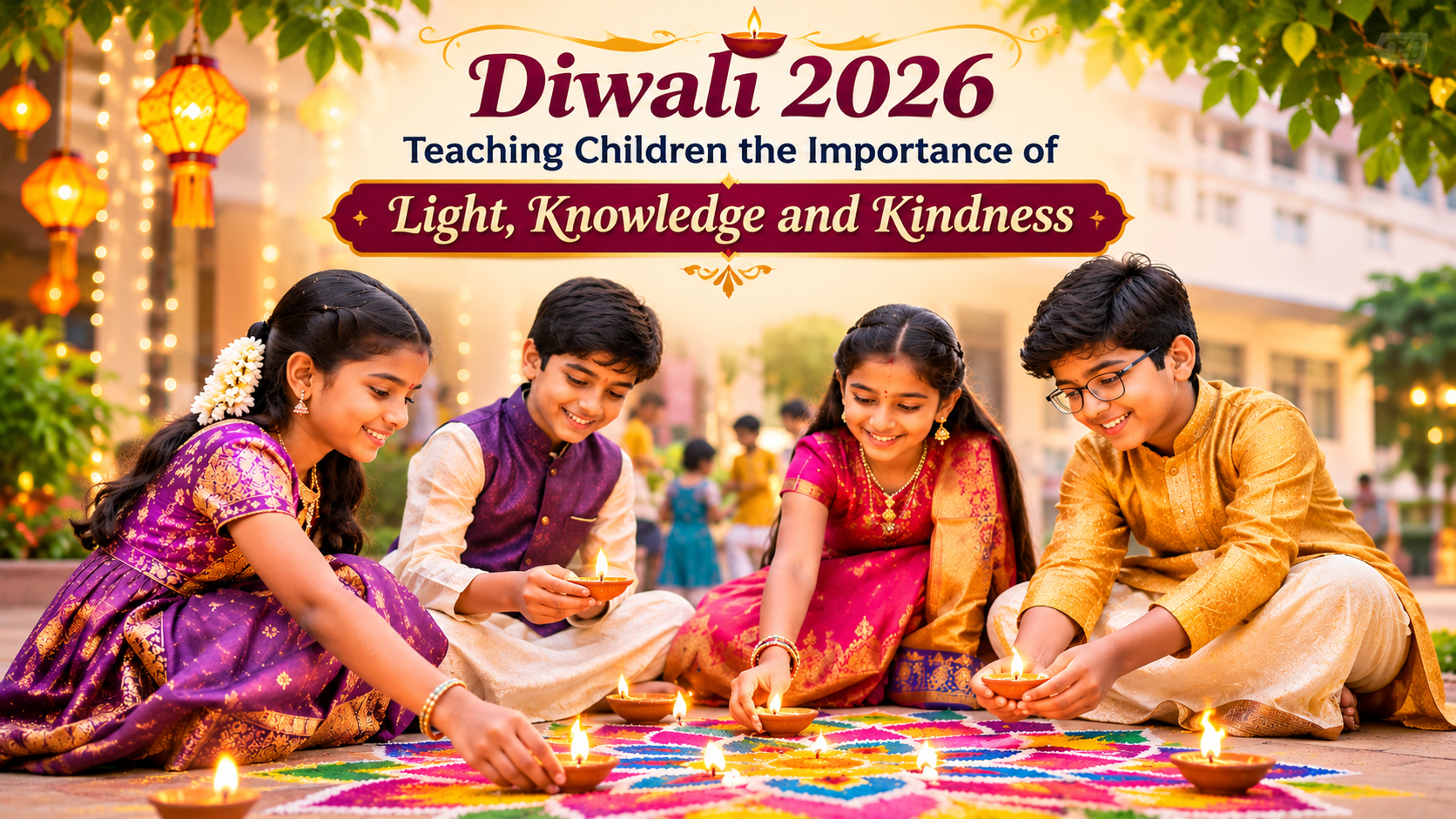
Diwali is one of India's most widely celebrated festivals, bringing families and communities together through lights, decorations, traditional customs and joyful gatherings. Beyond the colourful celebrations, the festival carries meaningful lessons about knowledge, kindness, responsibility and togetherness.
Diwali 2026, celebrated on 8 November, provides an opportunity for children to understand the cultural significance of the festival and explore the positive values associated with it.
For school students, Diwali can be more than a festive holiday. It can encourage curiosity about Indian traditions, inspire creative activities and help children understand how thoughtful actions contribute to a happier and more caring society.
Diwali, also known as Deepavali, is commonly referred to as the Festival of Lights.
The word Deepavali comes from Sanskrit and is generally understood to mean a row of lights or lamps.
The festival is celebrated in different ways across India, reflecting the country's diverse cultural and regional traditions.
In many parts of northern India, Diwali is associated with the return of Lord Rama, Sita and Lakshmana to Ayodhya after their exile, as described in the Ramayana tradition.
Other communities associate the festival with Goddess Lakshmi, Lord Krishna's victory over Narakasura, or different historical and spiritual traditions.
Although customs vary, the symbolism of light overcoming darkness and goodness overcoming negativity remains an important part of many Diwali celebrations.
Learning about these traditions helps children appreciate India's cultural diversity while recognising the values that connect communities.
One of the most meaningful symbols of Diwali is the lighting of traditional oil lamps, commonly known as diyas.
Light is often associated with knowledge, wisdom and awareness, while darkness can symbolise ignorance or uncertainty.
This connection provides a valuable educational lesson for children.
Just as a lamp illuminates its surroundings, learning helps students understand the world around them.
Reading books, asking questions, exploring scientific ideas and developing new skills allow children to expand their knowledge.
Students can practise the value of knowledge by:
Developing a regular reading habit.
Asking questions when they do not understand a concept.
Exploring subjects beyond their textbooks.
Sharing useful knowledge with classmates.
Learning from mistakes and trying different approaches.
The lesson: Knowledge helps children make informed decisions, solve problems and develop confidence in their abilities.
Diwali is a time when families exchange greetings, share sweets and spend time with loved ones.
These traditions provide opportunities to teach children the importance of kindness, generosity and empathy.
Small acts of kindness can make a meaningful difference in someone's day.
Helping a family member with festive preparations, sharing with others or offering thoughtful greetings are simple ways children can practise these values.
Children can:
Help parents and grandparents with suitable household preparations.
Share festive greetings with friends and neighbours.
Express gratitude to people who support them.
Include others in age-appropriate celebrations.
Donate useful items through responsible, family-supervised initiatives.
These activities encourage children to understand that celebrations are not only about receiving gifts but also about sharing happiness.
The lesson: Kindness and generosity help build stronger relationships and more supportive communities.
Festivals provide opportunities for families to spend time together and strengthen relationships.
During Diwali, family members may decorate their homes, prepare traditional food, light lamps and participate in cultural customs.
Children can learn valuable social skills by taking part in these activities.
Working together on decorations or helping organise a family gathering encourages communication, cooperation and shared responsibility.
Participating in Diwali preparations can help students understand:
The importance of spending meaningful time with family.
How responsibilities can be shared.
Why respecting elders and family traditions matters.
How cooperation makes activities easier and more enjoyable.
The value of listening to different perspectives.
The lesson: Togetherness grows when people communicate, support one another and appreciate shared experiences.
India is home to many languages, customs, beliefs and regional celebrations.
Diwali itself is observed through different traditions across the country.
In some regions, families begin their celebrations with Naraka Chaturdashi, while others place greater emphasis on Lakshmi Puja, Govardhan Puja or other customs.
Exploring these differences can be an engaging way for students to learn about Indian history, geography and cultural diversity.
Children can compare regional customs, identify states on a map and learn how festivals reflect local traditions.
This approach encourages cultural awareness without assuming that every family celebrates in the same way.
The lesson: Understanding different traditions helps children develop respect, curiosity and an appreciation for diversity.
Diwali is known for its colourful decorations, festive lighting and celebrations.
It also provides an opportunity to discuss environmental responsibility.
Excessive noise, smoke, litter and unnecessary consumption can affect people, animals and the environment.
Children can learn that joyful celebrations and responsible choices can go hand in hand.
Choose reusable decorations: Use decorations that can be stored and enjoyed again.
Save electricity: Switch off decorative lights when they are not needed.
Reduce unnecessary waste: Avoid excessive packaging and disposable materials.
Be considerate of animals and neighbours: Recognise that loud noises can cause distress.
Practise fire safety: Use lamps and candles only with appropriate adult supervision.
Keep surroundings clean: Dispose of festive waste responsibly.
Children should never handle fireworks independently. Any activities involving fire, lamps or fireworks require responsible adult supervision and compliance with local safety rules.
The lesson: Responsible celebrations show respect for the environment, public safety and the wellbeing of others.
Diwali offers opportunities for children to develop creativity through practical activities.
Making decorations, exploring traditional art and learning about the science of light can connect festive celebrations with classroom subjects.
Creative activities also encourage concentration, observation, coordination and problem-solving.
Diya Decoration
Students can decorate unlit clay diyas using paints and creative patterns. This activity encourages artistic expression and introduces children to traditional crafts.
Rangoli Design
Creating rangoli patterns using reusable or natural materials can help students explore symmetry, shapes, colours and geometric patterns.
Diwali Storytelling
Students can learn about different cultural stories associated with Diwali and discuss the values represented in them.
Science of Light Activity
Teachers can explain how light travels, how shadows form and why different materials reflect light differently through safe classroom demonstrations.
Diwali Greeting Card Making
Children can create handmade greeting cards with messages of kindness, gratitude and togetherness.
Festival Traditions Across India
Students can prepare short presentations comparing Diwali celebrations in different regions.
These activities help children connect cultural understanding with creativity, science, communication and practical learning.
Festivals often involve the efforts of many people, including family members, neighbours, artisans, farmers, shopkeepers and community workers.
Diwali provides an opportunity to help children recognise these contributions.
For example, traditional clay lamps are made by skilled artisans, while festive foods depend on agricultural products and the work of people involved in food production.
Understanding these connections helps children appreciate the effort behind everyday products and festive traditions.
Parents and teachers can encourage students to express gratitude through simple conversations and activities.
Children can write thank-you notes, acknowledge the efforts of others or reflect on the people who contribute to their daily lives.
The lesson: Gratitude helps children appreciate relationships, resources and the contributions of others.
Parents play an important role in helping children understand the meaning behind celebrations.
Rather than focusing only on decorations and festive activities, families can use Diwali as an opportunity for meaningful conversations.
Parents can explain the significance of traditional customs, encourage children to ask questions and involve them in age-appropriate preparations.
They can also discuss how values such as honesty, kindness, responsibility and respect are relevant throughout the year.
Reading stories, exploring cultural traditions and participating in creative activities together can make the celebration both enjoyable and educational.
When children understand the reasons behind traditions, they can develop a deeper appreciation of their cultural heritage.
Festivals are closely connected to history, culture, science, art and social values.
Learning about them helps students understand how classroom knowledge relates to everyday experiences.
For example, Diwali can introduce children to:
History and culture: Understanding traditions and their regional significance.
Science: Exploring light, energy and environmental awareness.
Mathematics: Identifying symmetry and patterns in rangoli designs.
Art: Developing creativity through festive decorations.
Social learning: Practising kindness, cooperation and gratitude.
Environmental education: Making responsible choices during celebrations.
This approach helps students see that learning is not limited to textbooks or examinations.
Everyday experiences and cultural celebrations can also provide meaningful opportunities to develop knowledge and practical skills.
Diwali 2026 reminds us that the true significance of a celebration extends beyond colourful decorations, lights and festive gatherings.
The festival offers children meaningful lessons about the importance of knowledge, kindness, gratitude, cultural understanding and responsible behaviour.
By exploring these values through stories, creative activities and family experiences, students can develop a deeper appreciation of both their traditions and their responsibilities towards others.
At Sri Viswasanthi Schools, we believe that connecting education with cultural experiences helps students develop knowledge, creativity and positive values. Diwali offers a meaningful opportunity to encourage children to carry the spirit of learning, kindness and togetherness into their everyday lives.
Wishing every student and family a happy, safe and meaningful Diwali 2026!
Monday - Friday : 9am - 4pm
Saturday : 9am - 1pm

