


For Enquiry
9948984444
9247456148

SRI VISWASANTHI EDUCATIONAL INSTITUTIONS
Near Vijayawada,Vuyyuru - 521 165,
Krishna Dt. (A.P.), India
FOR MORE DETAILS GIVE MISSED CALL TO
9247456148, 9948984444
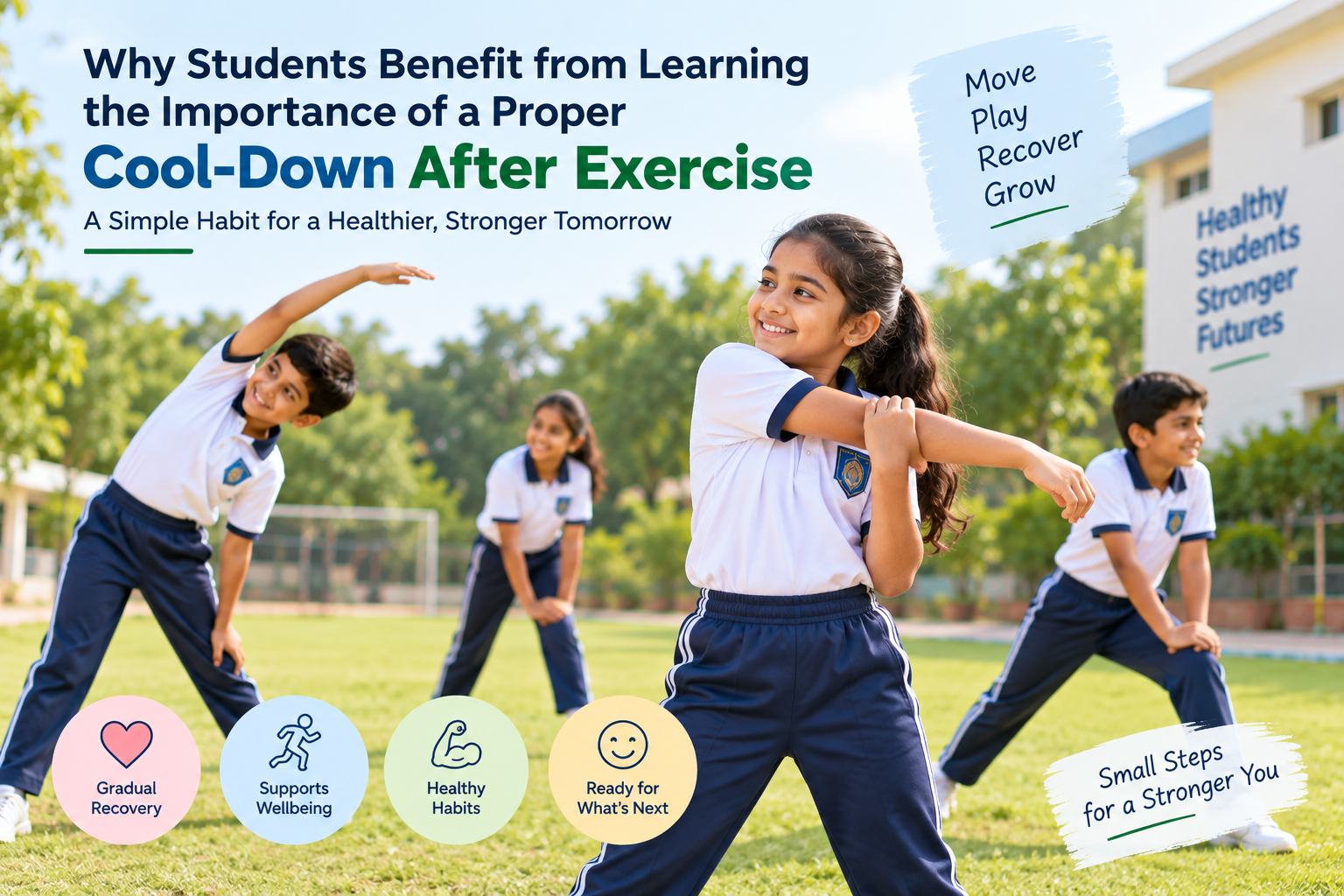
Physical activity is an important part of a healthy school life. Students may run, play sports, take part in physical education classes, practise for competitions or simply enjoy active games with friends. While warming up before exercise is often discussed, what happens after exercise is also important.
A proper cool-down gives the body time to gradually return to its usual state after physical activity. Teaching students this simple habit can help them develop a more thoughtful and balanced approach to fitness.
A cool-down is a short period of gentle movement and stretching after exercise or vigorous physical activity.
Instead of stopping suddenly after running or playing an energetic game, students can gradually slow down by walking gently and then performing suitable stretches.
A cool-down does not need to be complicated. Its purpose is to help students transition from active movement to normal rest.
When students are physically active, their breathing, heart rate and body temperature increase. A gradual reduction in activity gives the body time to settle down.
A cool-down can also help students become more aware of how their bodies feel after exercise. This encourages them to treat physical activity as something that includes preparation, activity and recovery.
Learning to cool down can help students understand that fitness is not simply about exercising as hard as possible.
A healthy approach to physical activity also involves:
These habits can help students develop a more balanced attitude towards exercise as they grow.
A cool-down can be simple and age-appropriate. Depending on the activity and the student's age, it may include:
After a running game or energetic activity, walking slowly for a few minutes can be an easy way to reduce activity gradually.
Simple stretches can be included after activity when appropriate. Students should perform stretches comfortably rather than forcing a movement or stretching through pain.
Taking a few calm breaths while standing or walking slowly can help students shift their attention from vigorous activity towards rest.
Gentle movements of the arms, legs and shoulders can provide a gradual transition after an active session.
Teachers and coaches can select suitable cool-down activities according to the age group and type of exercise.
One useful aspect of a cool-down is that it gives students an opportunity to notice how they feel after physical activity.
They may recognise that their breathing is faster, that they are warm or that their muscles feel tired after exercise. With guidance, students can learn that these sensations are signals worth noticing rather than ignoring.
This can encourage children to develop greater awareness of their own physical needs.
Students sometimes associate fitness with doing more, running faster or playing for longer. However, recovery is also part of being active.
Knowing when to slow down, rest and recover can help students understand that physical wellbeing involves balance.
This is especially valuable for students who participate regularly in sports or physical activities. Learning healthy habits at school can help them approach exercise more responsibly.
A cool-down should be relaxed and comfortable. Students do not need to compete over who can stretch the furthest or complete the most movements.
The purpose is to transition gradually from activity to rest.
Teachers can encourage students to focus on controlled movement, comfortable stretching and listening to their bodies rather than comparing themselves with classmates.
Schools can make cool-downs a natural part of physical education and sports sessions. After a game, practice session or fitness activity, students can spend a few minutes gradually reducing their activity before returning to their regular routine.
When students experience this consistently, they can begin to understand that physical activity has different stages and that each stage has a purpose.
Children learn many habits during their school years that can influence how they approach health and fitness later in life. Teaching students to warm up, exercise appropriately and cool down helps them see physical activity as more than simply playing a sport.
It introduces the idea of preparation, safe participation and recovery.
These are simple concepts, but they can help students develop a more responsible attitude towards staying active.
A proper cool-down may take only a few minutes, but it can teach students an important lesson: taking care of the body is part of being physically active.
Whether students are participating in a PE lesson, playing with friends or preparing for a school sports event, learning how to finish physical activity sensibly can become a valuable part of their fitness habits.
At Sri Viswasanthi Schools, encouraging students to participate in physical activities while developing safe and healthy exercise habits can contribute to their overall physical wellbeing and confidence.
Monday - Friday : 9am - 4pm
Saturday : 9am - 1pm

